
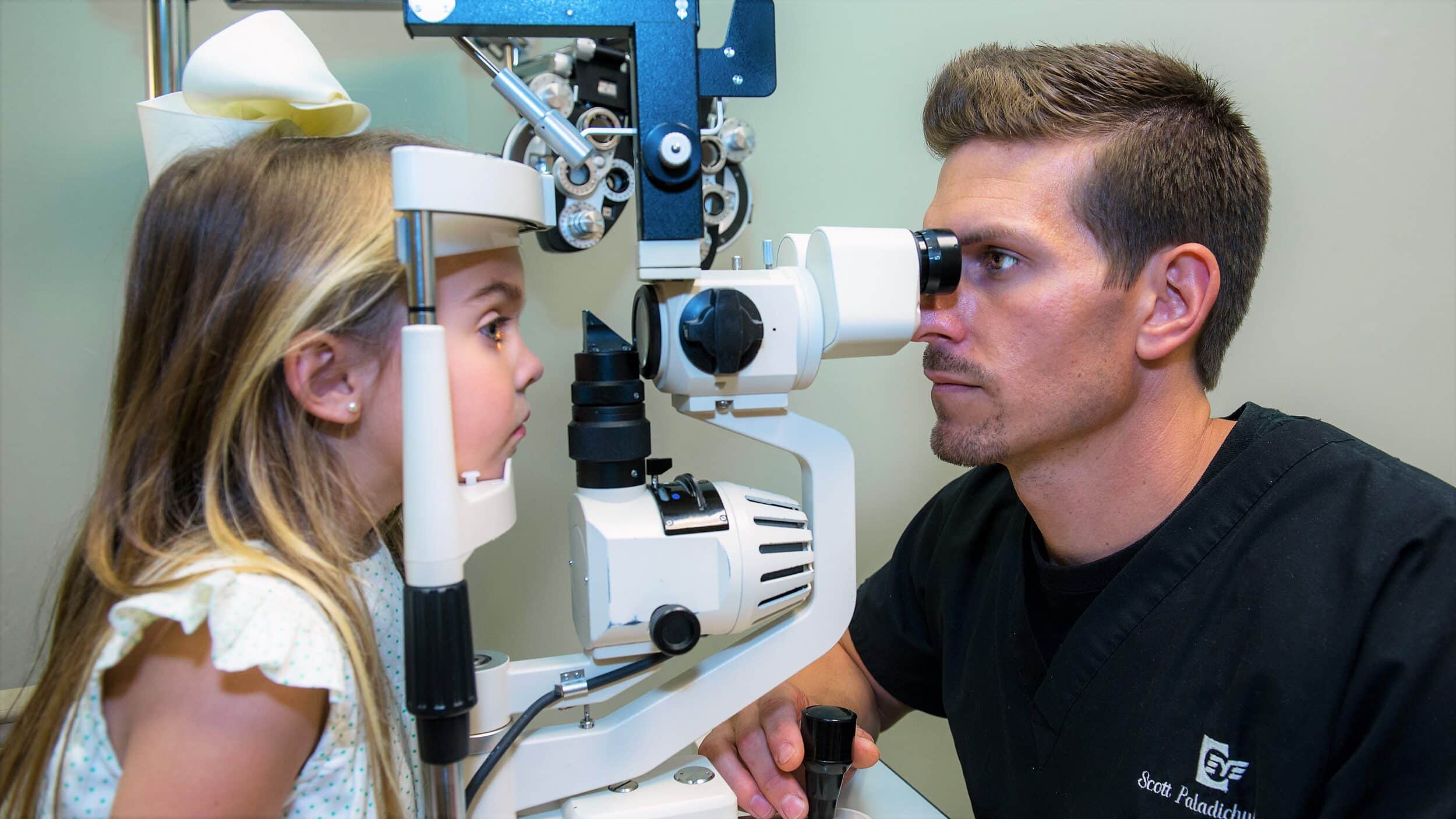
That sense that something isn’t quite right with your child’s eyesight may be more important than you realize. During Children’s Eye Health & Safety Month this August, here’s what you need to know to stay zeroed in on your child’s eye health.
If you’re the parent of an infant or toddler, our hats are off to you: You’ve got a lot going on with keeping them fed, changing their diapers, or chasing after them (once those little legs start working!). You’re also no doubt zeroed in on their health—every sniffle, every ear infection, every colicky, sleepless night.
Sometimes, though, you may be so focused on these immediate needs that you may miss something of a more subtle but still serious nature. Some eye issues, for example, could easily fly under your radar.
“Several eye-related problems can take a while to manifest, so it’s easy to miss their onset,” says Dr. Scott Paladichuk, a Therapeutic Certified Optometrist with Hattiesburg Eye Clinic. “However, there are signs you can key in on that indicate a possible problem.”
Dr. Paladichuk says some of these signs can emerge in a baby’s first year. “After about four months of age you should be on alert for eyes that don’t seem to work together. Also watch for constant watering, crusting, unusual changes in the pupils, droopy eyelids, or light sensitivity.”
Preschoolers also may show problem indications if they’re constantly squinting, tilting their heads to see, or frequently rubbing their eyes. And parents should watch for symptoms seemingly unrelated to eyesight, particularly if their children are school age: frequent headaches, reading avoidance, or declining grades.
“If you’re noticing anything out of the ordinary with their eyes or vision, an eye exam is in order,” says Dr. Paladichuk.
And even if everything seems to be fine, eye exams at certain intervals of a child’s development remain a good idea.
“I recommend a vision screening during a pediatric well-child visit or with an eye care professional within a child’s first year of life,” says Dr. Paladichuk. “You can then follow up with a more detailed eye exam between 2 and 4 years to detect conditions like ‘lazy eye’ or refractive errors.”
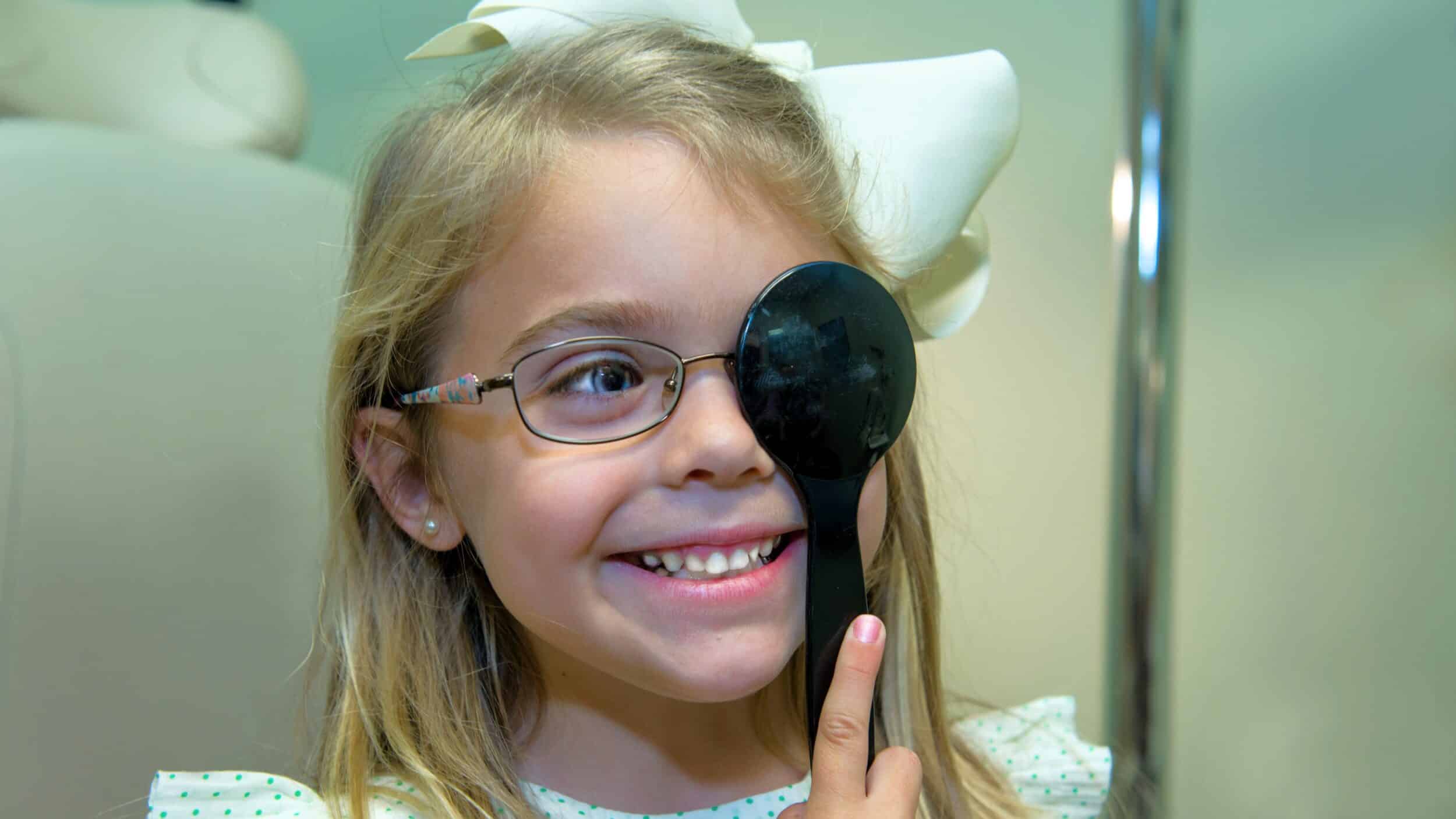
From there, a good schedule is a routine exam at the start of school and one thereafter every two years. Unless, of course, an issue is detected—you’ll then need to work with your eye doctor on treatment and follow-ups.
Besides alertness, Dr. Paladichuk says parents are also critical to further protecting their children’s eye health.
“There are a number of regular household items that could prove harmful to a toddler’s eyes—cleaning chemicals, sharp objects like scissors or screwdrivers, or toys not appropriate to their age. It’s important to keep anything like this locked away or out of reach of curious hands.”
And what’s beneficial for their general health is usually beneficial for their eyesight.
“I always promote a healthy diet with kids along with plenty of outdoor exercise,” says Dr. Paladichuk. “And consistent sleep—along with limited screen time on electronic devices—does promote good eye health.”
Understandably, things get hectic with little ones in your life. But staying aware of what’s going on with their eyesight could lead to early intervention that just might save their future vision.
Visit our website to learn more about Hattiesburg Eye Clinic’s eye care for children. To find out how Hattiesburg Eye Clinic can improve your overall vision health, call 601-268-5910 (or toll-free 800-624-8254) or schedule a consultation with us at www.hattiesburgeyeclinic.com/contact-us/.