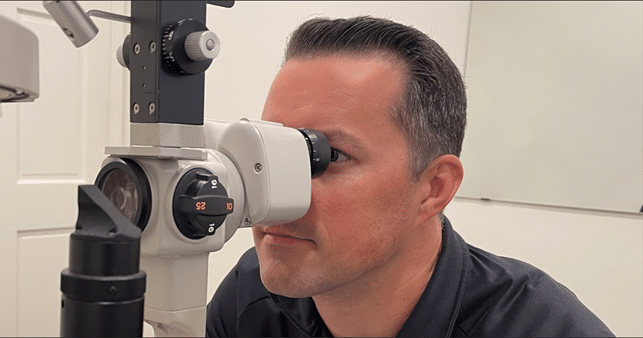
Hattiesburg Eye Clinic now offers a wide array of oculoplastic surgeries, performed by the clinic’s first and the region’s only Full-Time, Fellowship-Trained Oculofacial Plastic Surgeon.
Oculoplastic surgery encompasses medical and cosmetic surgical procedures to correct and repair issues with external eye elements, as well as adjacent parts of the face. An oculoplastic procedure can help your eyes function better, as well as enhance your appearance.
Our eyes couldn’t function without the support of eye sockets, tear ducts, or even eyelids and lashes. And like the eyes, many of these supporting structures complement our ability to connect and interact with others as a visible part of the face. When these supporting structures are injured, diseased, or impacted by the aging process, the eyes may not function properly.
Eyelids and Lashes—Enhancing Function and Appearance
The eyelids and lashes work in tandem to protect the eyes from dust, debris, or other physical threats. The eyelids may also mar appearance when they sag or droop, often due to aging.
There are a number of oculoplastic procedures to address the following medical or cosmetic problems involving the eyelids and lashes.
-
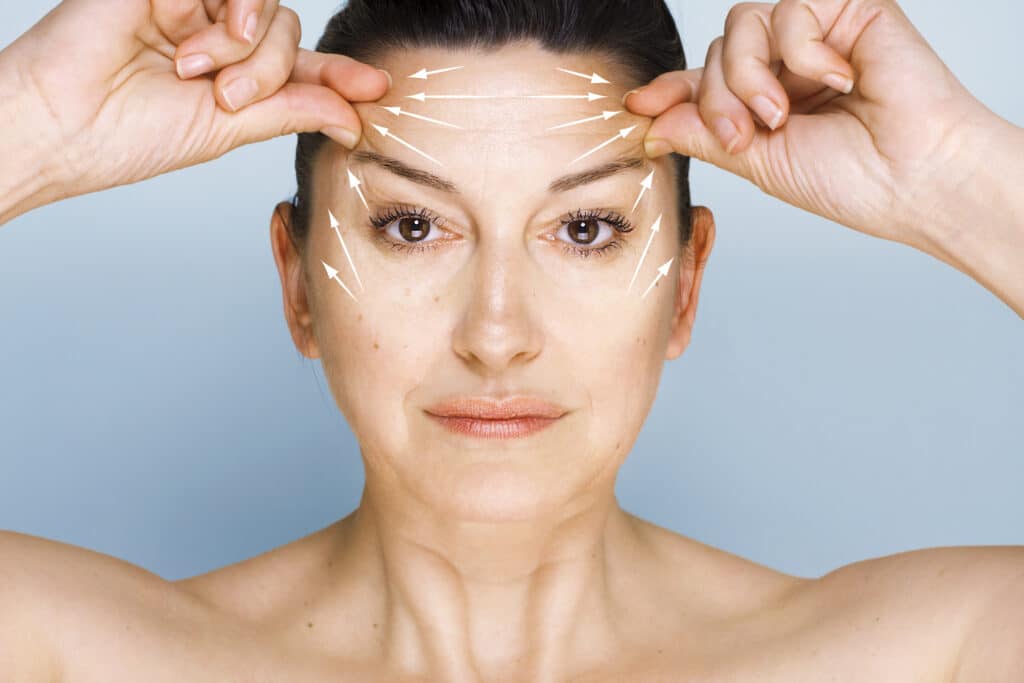
Bags under the eyes—A surgical eye lift, also known as Blepharoplasty removes excess fat and tissue from the eyelids, as well as reinforcing the muscles and tendons around them. This often results in better eyelid function and a more restful appearance.
-
Eyelids turned outward—Ectropion is a condition in which the eyelids have turned outward, exposing the eyes to dryness or irritation. Ectropion can occur for a number of reasons, including trauma, birth defects, or related problems such as a tumor or excess fat. The procedure involves removing a portion of the eyelid and realigning the ligaments to tighten the lid.
-
Eyelids turned inward—Known as entropion, this condition occurs when the eyelids turn in toward the eyes. As a result, the eyelid skin and lashes can rub against the eyeball and cause discomfort and irritation, especially to the cornea. Although temporary treatments exist, a surgical procedure may be necessary to permanently repair entropion.
-
Droopy eyelids—Ptosis, when an upper eyelid droops over the eye, occurs when the muscle that lifts the eyelid weakens or stops functioning properly. Often the result of a birth defect or the aging process, ptosis can limit vision and possibly give rise to other eye problems. Surgeons can repair ptosis through a number of procedures to tighten the muscle and enable it to more adequately raise the eyelid.
-
Misdirected eyelashes—Trichiasis occurs when eyelashes grow inward toward the eye rather than away from it. As a result, misdirected eyelashes can directly contact the eyeball, potentially irritating and injuring the cornea and other parts of the eye or eyelid, and may contribute to visual impairment or blindness. Surgeons have a number of procedures to treat the condition, with both temporary and permanent outcomes depending on its severity.
-
Eyelid lacerations—A traumatic cut to the eyelid can cause more than an unsightly wound—it could also signal further injury to the eye. Treating such an injury requires more than simple suturing: A surgeon treating an eyelid laceration must consider the location of the cut, other trauma involving the eye, and how the procedure will impact the functionality and appearance of the eyelid.
-
Eyelid lesions—Lesions—abnormal tissue growths—can occur because of injury, infection, or disease, sometimes even cancer. Eyelid lesions rarely fall into that latter category, and they usually don’t pose a threat to vision. Still, they should be examined, removed and biopsied to assure they’re not malignant. Removing a lesion may also require surgical repair.

Orbit
The eyes are normally cradled within the eye socket or orbits, providing them a kind of bony armor against physical contact. But that protection can be lost—from overwhelming force that fractures the orbit, or disease that affects the size of the eye or its position within the orbit.
Oculoplastic surgeons can surgically treat the following eye orbit problems:
-
Fractures—an orbit has a number of bony sections, any of which can break when impacted by a physical force. Being hit by a baseball (or fist), a car crash, or a tumble or fall are all possible scenarios that result in an orbital fracture. Although some fractures can heal adequately on their own, others are so severe that a surgical procedure may be necessary to repair the damage.
-
Bulging eyes— Proptosis describes a condition in which one or both eyes seem to bulge outward from their normal position. Besides leaving a person with a permanent unnatural expression, proptosis can also inhibit blinking, which can cause dry eyes or corneal damage due to inadequate lubrication. Some cases are so severe that the patient may need surgery to correct or repair the defects causing the proptosis.
-
Tumors—Although rare, tumors can develop within the tissues behind the eye or spread to the eye from other parts of the body. Whether malignant or benign, a tumor can put pressure on the eye to bulge out (see proptosis above). Depending on the type and location of the tumor, treatment can include medication, laser application, or surgical removal. Malignant tumors may also require cancer treatments like radiation or chemotherapy.
-
Eye removal—Circumstances like eye cancer, trauma, disease, or a blind eye with complications may require the removal of the eye. Oculoplastic surgeons can employ one of two procedures, depending on the condition of the eye and patient: enucleation, the removal of the entire eyeball, followed by the control muscles reattached to an artificial eyeball; or evisceration, in which the inner contents of the eye are removed, but the scleral shell (white of the eye) is left intact.
Tear Ducts
Tears play an important role in the eyes’ overall health and function. It’s up to the tear duct system to maintain just the right balance of this important bodily fluid. When a tear duct is obstructed, you are at risk for an infection that may develop into an abscess.
Abnormal tearing can result from a number of causes, including eyelid abnormalities, dry eye syndrome, or from a blocked tear duct.

-
Blocked tear drainage—Over tearing is often the result of a blockage within the tear duct drainage system, either in the duct that drains into the nasal passages or within the nasal passage itself. A dacryocystorhinostomy creates a new passageway from the eye into the nasal drain and bypasses the blockage. Depending on the blockage location, the surgeon may create this bypass under the facial skin or within the nose. This procedure reduces excessive tearing and creates better fluid movement across the eye.
-
Lacrimal gland surgery—The lacrimal gland found in the outer corner of each eye secretes substances that stabilize the tear film so that they remain on the eyes longer. The lacrimal gland can become diseased or malpositioned. This may warrant surgery to re-position the gland or to biopsy the gland.

Other Cosmetic Treatments
An important part of an oculoplastic surgeon’s calling is to improve the appearance of the eye, the eyelids, or other portions of the upper face. Sometimes cosmetic concerns go hand in hand with restorative measures, as with reconstructing the orbit or other structures around the eye after removal of skin lesions by a dermatologist. Often, though, the performed procedure is purely cosmetic. When upper and lower blepharoplasty, as well as brow lifts, are not covered by insurance they are considered cosmetic and would have to be paid for out of pocket.
Another is Botox injections into the skin to temporarily reduce wrinkling. These injections contain a mild and purified form of botulinum toxin that blocks nerve signals in facial muscles and prevents them from contracting, thus relaxing the targeted wrinkle.
Another common cosmetic treatment performed by oculoplastic surgeons is the injection of dermal fillers. These gel-like substances can help enhance the contours of the face, as well as soften wrinkles.
Frequently Asked Questions About Oculoplastic Surgery
Most oculoplastic procedures can be done outpatient at our ambulatory surgery center (ASC). This depends upon your overall medical health and if it’s safe for you to have surgery outside of the hospital, and also the type of procedure you’re having. Some surgeries require general anesthesia which we do not provide at our ASC, therefore your surgery would need to be done at a facility that provides general anesthesia. Very rarely would you need to stay overnight after an oculoplastic surgery.
If your surgery is medically necessary, insurance helps cover the cost of surgery. If your surgery is considered cosmetic, insurance does not help cover the cost of surgery.
You generally need a week of no heavy lifting, straining, bending at the waist, or any intense physical exertion. Bruising tends to resolve in the first couple of weeks.
Most oculoplastic surgeries, such as eyelid surgery, have very little to no pain at all and does not require pain medication other than Tylenol. Some surgeries that involve the orbit have a chance of tenderness and discomfort, for which post-operative pain medication would be prescribed for you.
Get In Touch With Us:
To learn more about Hattiesburg Eye Clinic and our (601) 268-5910 or toll-free at +1 (800) 624-8254 or schedule a consultation.