

During Halloween Safety Month, here’s what you can do to protect your children’s eyes during the biggest dress-up night of the year.
Halloween typically means two things to kids: a chance to plunder the neighborhood for candy; and—at least for one night—transforming into someone else. Whether it’s a cowboy, a princess, or the latest Marvel character, millions of children don costumes to participate in the
world’s largest masquerade ball.
It’s all in good fun—but danger to the eyes also lurks within many creative costumes. Potential injuries can range from short-term irritation to long-term vision loss.
But don’t cancel your child’s Halloween transformation just yet, because keeping their eyes safe is pretty simple. According to Dr. Aubrey Fulton, a Therapeutic Certified Optometrist with Hattiesburg Eye Clinic, you should pay close attention to three costume elements: contacts,
makeup, and props.
Be cautious with costume contact lenses
In recent years, costuming has gotten a boost from the emergence of specialized contact lenses. Pairing vampire eyes, for example, with a Dracula costume simply takes the look to a new level.
And many costume lenses are fairly inexpensive, some for as little as $20-$30. What could go wrong?
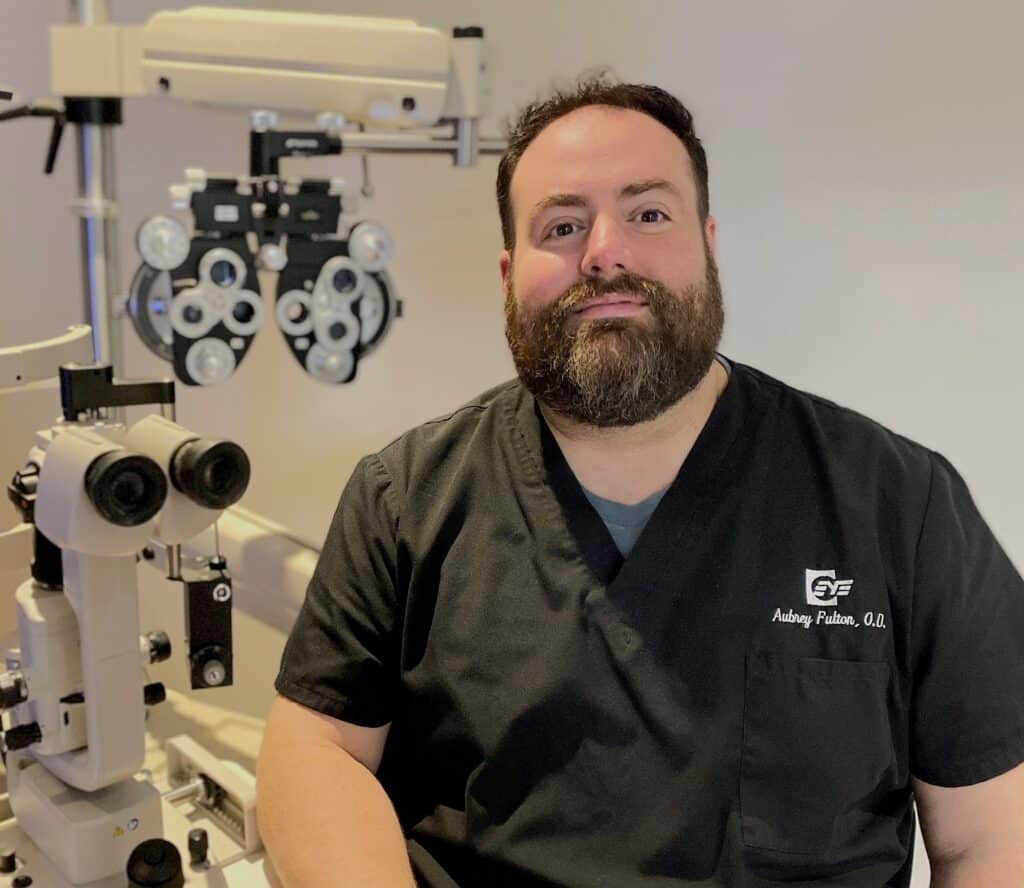
A lot, says Dr. Fulton.
Over-the-counter costume lenses have earned a bad reputation among eye professionals. We see a lot of complications arising from patients who’ve worn costume lenses. Many of these offers are illegal. Sellers who offer costume lenses without a prescription treat them as mere decorations rather than medical devices—and put people’s eye health and vision at risk.
Dr. Fulton says contact lenses aren’t simple adornments, they’re classified by the FDA as medical devices. All contact lenses, including costume, should be fitted by a licensed eye doctor to minimize irritation and risk of eye injury.
Keep makeup away from the eyes
With the rise of homemade Halloween costumery, parents often turn to cosmetics for a more realistic look. It’s important, though, to minimize the use of cosmetics, glitter, or false eyelashes, particularly in close proximity to the eyes.
“The most obvious concern with makeup near the eyes is skin irritation or allergic reactions to the lids or even inside the eye,” says Dr. Fulton. “You should choose cosmetic products that are hypoallergenic and approved for the delicate skin—look for products labeled ‘Safe for use
around eyes.’”
In addition to the right products, Dr. Fulton also has advice for application. “Don’t apply any makeup beyond the lash line, and be careful with hard or sharp applicators like eyeliner pencils, brushes, or tweezers. It’s also best to avoid products near the eye like false eyelashes or glitter. Don’t share cosmetics, and be sure to clean off all makeup as soon as possible after coming in for the night—old makeup can breed bacterial growth.”
Use soft props as much as possible
Every pirate needs his dagger, every princess her scepter. But props, if they’re rigid and pointed like the real thing, could pose a traumatic eye risk, particularly when young children are moving around outside in dim light.
“In most cases, anything that can contact the eyes poses a significant injury risk,” says Dr. Fulton. “It’s important that props like swords, knives, staffs or the like aren’t pointed, nor should children be allowed to swing them about. Halloween is a time for fun and perhaps a bit of mischievousness, but we should always keep safety uppermost in our minds.”
For one night out of the year, what children often imagine can take on physical form. For the little Spiderman or Hermione in your life, a few simple safety tips can ensure a happy memory of this enchanted evening.
To learn more about children’s eye care at Hattiesburg Eye Clinic, be sure to visit our website. To find out how Hattiesburg Eye Clinic can improve your vision health, call 601-268-5910 (or toll-free 800-624-8254) or schedule a consultation with us at www.hattiesburgeyeclinic.com/contact-us/