Four Reasons Say, Absolutely. During Healthy Aging Month this September, here’s why you should make an annual eye exam part of your healthcare regimen if you’ve reached middle age.
“If you’re over forty, you should have your eyes checked once a year.”
That’s universal advice every eye provider will give you—even if you’ve never had problems with your eyes before. So, why in the world should you start now, when you’ve reached middle age?
There are, in fact, 4 good reasons to make annual eye exams a part of your healthcare regimen during your later years that just might save your eyesight—and your life.
1: Natural Vision Changes
Even if you’ve always enjoyed great eyesight, its sharpness can still change with age. For example, you might begin encountering difficulty reading small print, particularly in dim light.
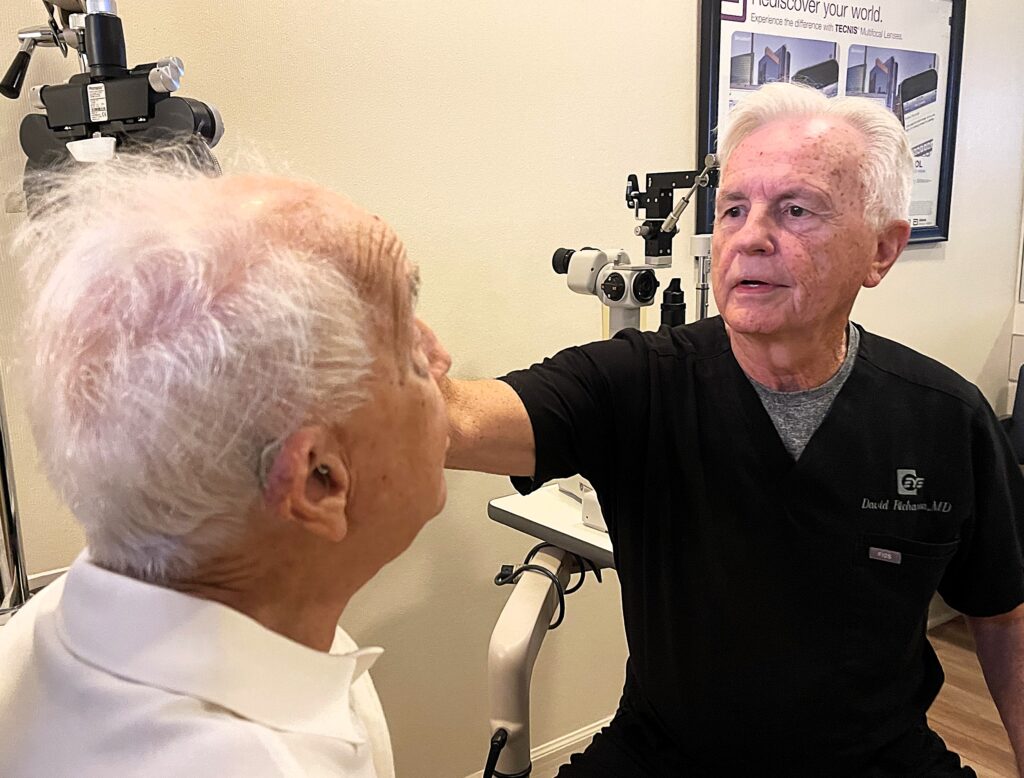
“This is very common eyesight change at middle age is called ‘presbyopia’,” says Dr. David Richardson, ophthalmologist with Hattiesburg Eye Clinic. “It happens because our natural lens becomes less compliant and doesn’t accommodate as well to changes in focus. As a result, people begin to experience blurry near vision.”
For most people without other refractive (focusing) issues, magnification glasses (or “readers”) help improve reading vision. But if the condition is more severe, something an eye exam could reveal, you may need a prescription correction to improve your vision.
2: Accelerating Refraction Errors
If you’ve already been wearing glasses or contacts, you may have only experienced the occasional upgrade in your prescription. As you get older, though, those changes may come more frequently and in different ways.
“Your eyeglass or contact prescription will probably change, either in greater nearsightedness, farsightedness or astigmatism,” says Dr. Richardson. “An annual exam not only updates your prescription, but also chart any changes.”
3: Increased Risk for Serious Eye Diseases
If you look at the overall U.S. population, the highest percentage of people with diseases that cause impaired vision are over 50—and that risk grows as people get older.
“The most concerning eye diseases for older people are cataracts, macular degeneration, and glaucoma,” says Dr. Richardson. “The most prominent is cataracts—nearly everyone develops increased clouding of the natural lens as they age.”
Most major eye diseases take time to develop, so an annual exam can often detect a disease early in its development. Getting ahead of a disease may help expand your treatment options, and possibly stop or slow its progression.
4: Other Health Issues
Remember the old adage, “The eyes are the window of the soul”? They may also offer a window into the rest of your body’s health. An eye exam can uncover indications of serious medical conditions like diabetes, autoimmune diseases, or cardiovascular problems.
Dr. Richardson can personally attest to this particular benefit of eye exams. “About eleven years ago I underwent a retinal imaging scan that revealed several abnormal hemorrhages in my eyes, indicating a less than normal blood flow. I followed up with a cardiologist who found I had a blockage of the ‘widow-maker’ coronary artery that was repaired with bypass surgery.”
Dr. Richardson avoided what could have been a fatal heart attack—all thanks to an eye exam.
Getting your eyes checked every year is fairly routine, and much less invasive than other medical exams you might undergo. But what it lacks in “excitement,” it can make up for in helping you preserve and protect your vision—and maybe the rest of your health.
To learn more about senior vision care at Hattiesburg Eye Clinic, be sure to visit our website. To find out how Hattiesburg Eye Clinic can improve your vision health, call 601-268-5910 (or toll-free 800-624-8254) or schedule a consultation with us at www.hattiesburgeyeclinic.com/contact-us/