
Is Vision Loss Inevitable With Glaucoma?
The answer greatly depends on getting an early diagnosis. During Glaucoma Awareness Month this January, here’s what you need to know about this serious eye disease.
Around 4.2 million Americans have glaucoma, half of whom don’t even know they have it. Mainly affecting people over 60, diabetics, or those with a family history of the disease, it’s also 6 to 8 times more prevalent among African Americans than Caucasians.
Beneath the statistics, though, lies another unsettling fact: Glaucoma is the second leading cause of blindness after cataracts.
“Glaucoma is a disease of the optic nerve, which can become damaged over time due to chronic high eye fluid pressure,” says Dr. Adam Quinn, Hattiesburg Eye Clinic’s glaucoma specialist. “If not treated, it can result in permanent vision loss or blindness.”
There is no cure for glaucoma. But that doesn’t mean having glaucoma sentences you to inevitable vision loss. Substantial advances in treatment options over the last half century have made it possible for patients to manage their disease—and to manage it quite well.
The treatment goal is to keep the eyes’ aqueous humor, the clear fluid that helps nourish the eyes, within normal pressure limits as much as possible. This requires a lifetime commitment, using a variety of drugs and techniques to daily normalize pressure that would otherwise be too high.
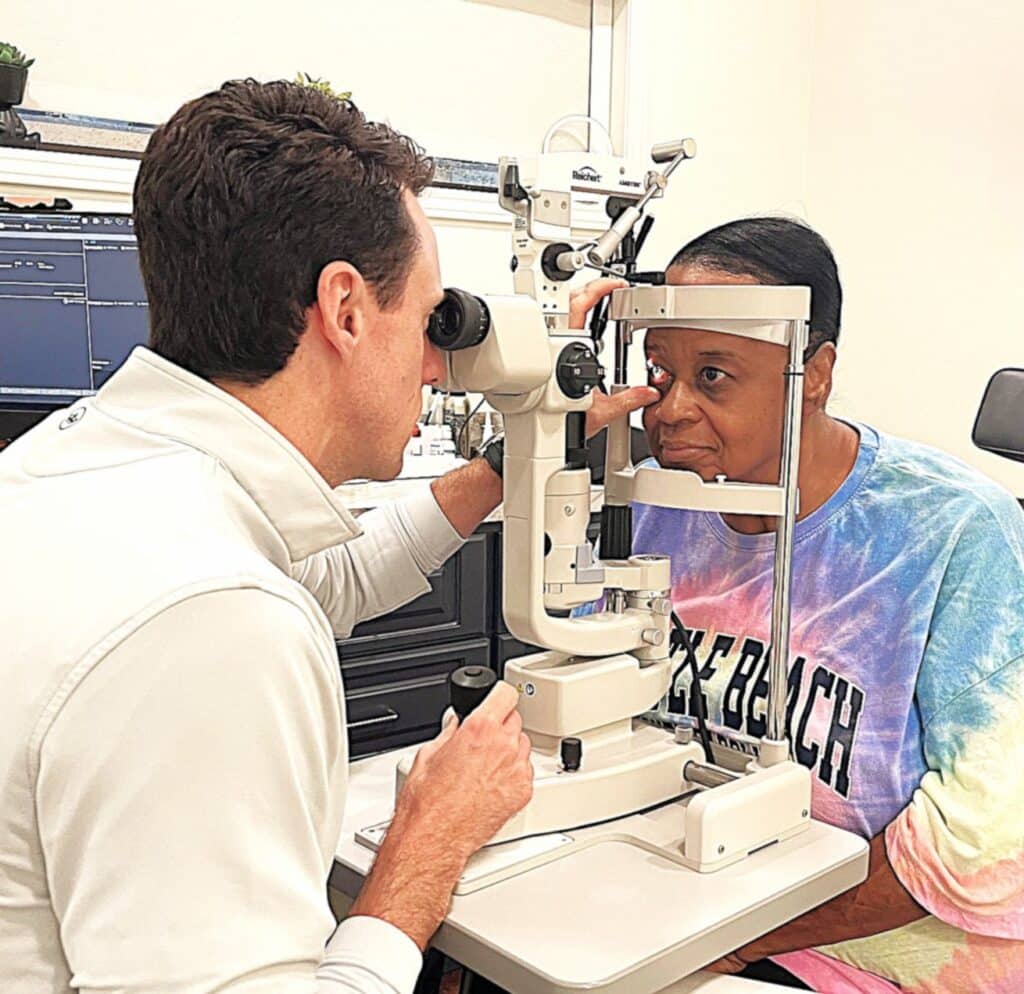
For best results, this treatment journey should begin early in life. “Detecting glaucoma really comes down to early exams or screenings, which we can do in the office during routine exams,” says Dr. Quinn. “Once we’ve determined you have glaucoma, we can then develop an immediate treatment plan.”
For most patients, the plan begins with medicated eye drops applied daily to lower pressure. Eyedrops have been a mainstay of glaucoma treatment for decades, and have helped millions slow their disease’s progress.
But eyedrops can have a few drawbacks. For many, this could be the daily grind of applying the drops. But now a new method for medicinally reducing eye pressure has become available, one that doesn’t require daily patient involvement.
Known as DURYSTA™ implants, a doctor inserts these tiny devices into each eye through a minor surgical procedure. Each implant slowly releases medication automatically, giving patients several months or even years of pressure reduction without needing to apply drops.
A more serious drawback, though, is that the drops may not be effective at lowering pressure for some patients—or they lose their effectiveness over time. Patients in this category need alternative pressure-reducing treatments.
Fortunately, there are new options available for glaucoma patients.
“There’s a lot of new technology emerging in the field,” says Dr. Quinn. “These include a number of minimally invasive surgeries, often through laser technology, that can help reduce pressure when eye drops alone aren’t effective.”
With all of the available treatment methods, today’s glaucoma patient has a fighting chance to preserve their vision long-term. But all of these cutting-edge treatments are of little help if permanent damage has already occurred.
That’s why it’s crucial to diagnose glaucoma as early as possible. If you or a loved one belongs to one of the glaucoma risk groups, or have a family history of the disease, don’t wait—see your eye doctor for a routine exam or screening as soon as possible.
Uncovering and managing glaucoma from its early stages is your best chance for a lifetime of normal vision.
To learn more about Hattiesburg Eye Clinic’s comprehensive glaucoma care, be sure to visit our website. To find out how Hattiesburg Eye Clinic can improve your vision health, call 601-268-5910 (or toll-free 800-624-8254) or schedule a consultation with us at www.hattiesburgeyeclinic.com/contact-us/