February is Age-Related Macular Degeneration Awareness Month. Here’s what you need to know about this serious eye disease that affects millions of Americans.
While reading a book or magazine you start to notice how the words in the center of the page aren’t there anymore. Not just blurry—gone, washed out by a dark hole that has appeared in the middle of your eyesight.
This is the experience of millions of Americans over the age of 40. It’s an eye disease called Age-Related Macular Degeneration (AMD), one of the leading causes of vision loss in older adults.
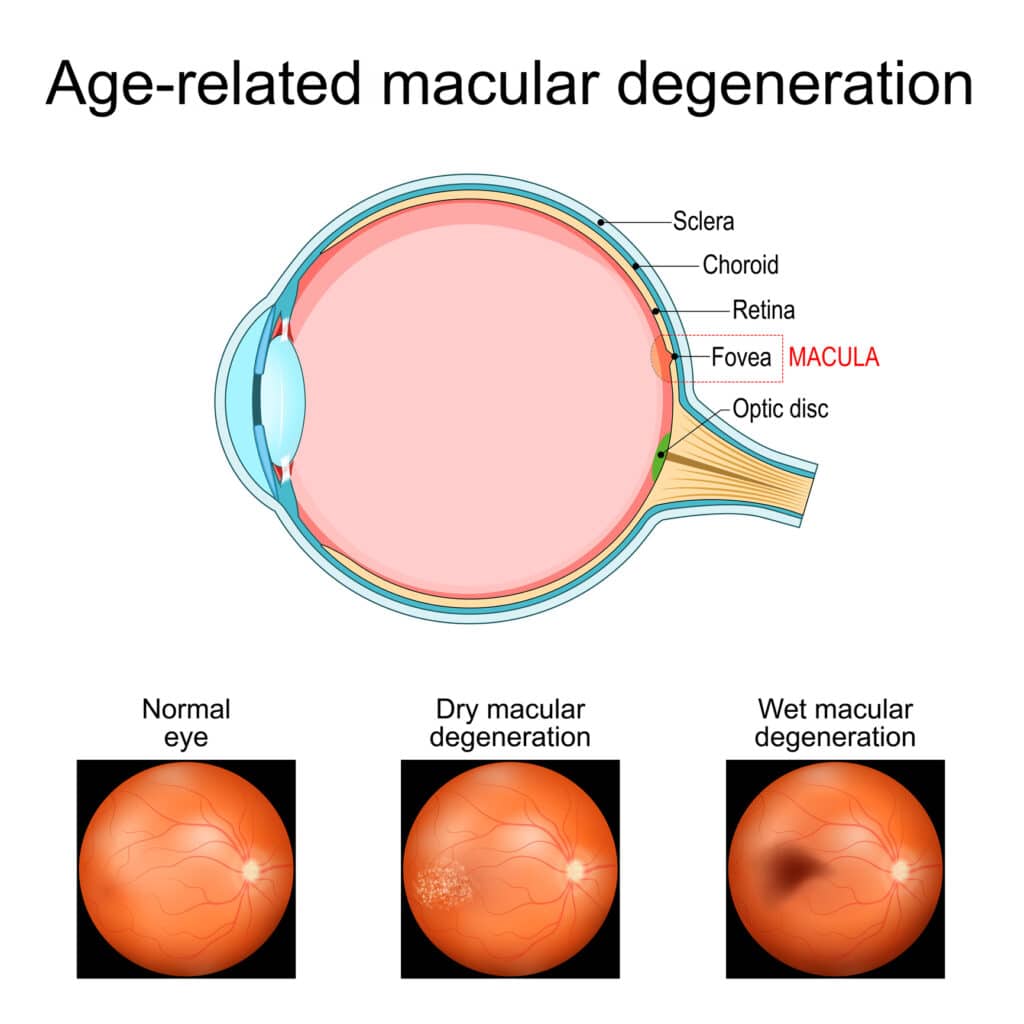
“AMD occurs when the macula—the tiny spot in the retina in the back of the eye that handles sharp central vision—begins to break down,” says Dr. Todd Williamson, ophthalmologist and eye surgeon with Hattiesburg Eye Clinic. “Because it’s progressive, any noticeable symptoms could indicate you’ve already experienced permanent damage to your eyesight.”
Dr. Williamson says AMD can occur in two different ways, or types. “The most prevalent is called Dry AMD, which happens when tiny bits of material called drusen begin to accumulate under the retina. This causes the macular cells to thin out, resulting first in a mild vision blur. It makes up about 85% of AMD cases, and tends to progress slowly.”
The other type, Wet AMD, is rarer but more aggressive. “This occurs when abnormal blood vessels leak fluid or blood into the macula, leading to a sudden and severe distortion—like straight lines appearing wavy—or a defined dark spot in your vision,” says Dr. Williamson. “If not treated, Wet AMD can lead to rapid, permanent vision loss.”
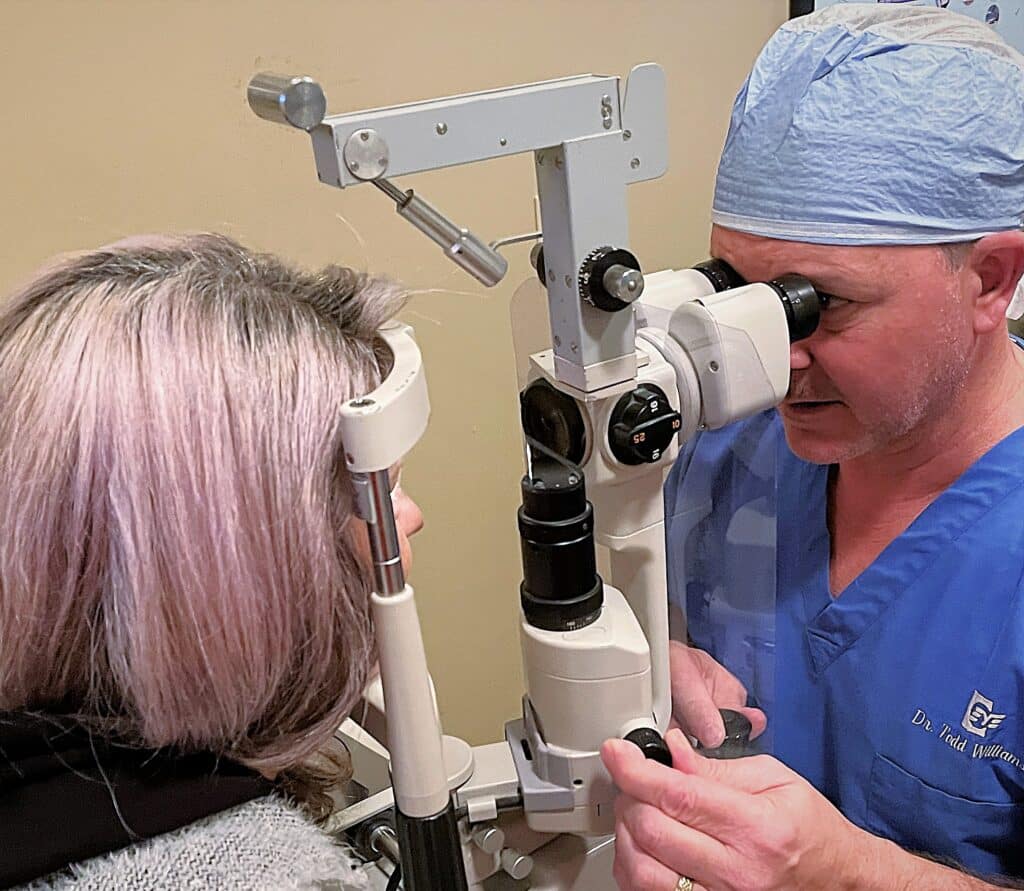
Fortunately, doctors can diagnose AMD in its earliest stages. It begins during a routine exam by viewing the eyes through a device during a slit lamp, which enables a doctor spot drusen or other fluid accumulation.
For a more definitive diagnosis, particularly in determining if it’s Dry or Wet AMD, a patient may undergo other tests, including angiography (viewing the effect on the eyes of injected dye into the bloodstream) or an Amsler grid test to help catch visual distortions early. “These all take little time and are mostly non-invasive,” says Dr. Williamson.
So, can getting an early AMD diagnosis realistically boost a patient’s chances of a better vision outcome in the future?
“Yes, absolutely,” says Dr. Williamson. “It can make a huge difference in preserving vision longer, especially with Wet AMD.”
For Wet AMD patients, treatments include eye injections by a retinal specialist with a substance known as anti-VEGF that slows the development of leaky vessels before they cause damage. For Dry AMD, Dr. Williamson says it’s more about monitoring and making lifestyle adjustments to help stall the disease’s progression.
“Dry AMD patients can slow the development of drusen by supplementing their diets with antioxidants, or immediately quitting smoking—if they have that habit—which has been shown to preserve sight longer.” Even when damage does occur, Dr. Williamson says patients may often benefit from vision aids like specialized glasses that help them cope with any impairments to their eyesight.
But Dr. Williamson can’t stress enough the importance of finding AMD as early as possible—and that means being sure to get an annual eye exam beginning around 40.
“Late diagnosis often leads to severe, permanent damage. Getting your eyes checked regularly can really stack the odds in your favor in avoiding that kind of serious vision loss.” To learn more about Hattiesburg Eye Clinic’s AMD diagnosis and treatment options, be sure to visit our website. To find out how Hattiesburg Eye Clinic can improve your vision health, call 601-268-5910 (or toll-free 800-624-8254) or schedule a consultation with us at www.hattiesburgeyeclinic.com/contact-us/