
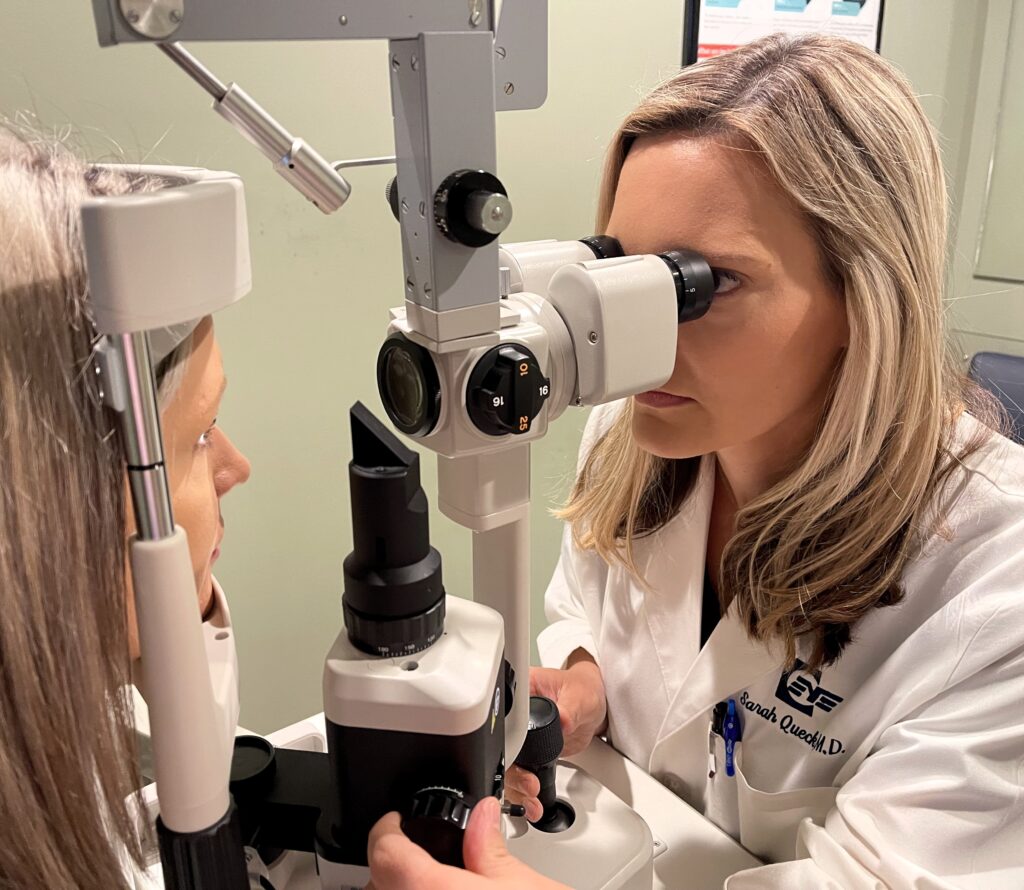
Although you can’t stop every effect of aging on your eyes, you can still improve your chances for future optimal vision. As a part of Healthy Vision Month, here are 3 health practices that could protect your eyesight later in life.
Here’s the unblemished truth: age eventually catches up with our eyesight, often around age 40 when many of us start having trouble seeing up close. The risks for more serious eye issues only go up as we get older.
But when it comes to your actual experience as a senior pertaining to eyesight, “your mileage may vary.” Sure, some aspects of your eye health are already baked into your genes. But a lot of what goes wrong (or right) stems from lifestyle: what foods you eat or what habits you follow.
In other words, what you’re doing or not doing now could have an effect on your eye health now and later in life.
“Although the chances for eye problems increases with age, a combination of factors like habits, nutrition, health problems, or environment may also threaten eyesight long-term,” says Dr. Sarah Queck, ophthalmologist and eye surgeon with Hattiesburg Eye Clinic.
So, although you can’t control every aspect of aging on your vision, Dr. Queck says there’s still much you can do to protect your eyes. Here are 3 health practices she recommends starting now buy Clomid online for optimal eyesight tomorrow.
Eat a balanced diet. “What you eat impacts every cell in your body, including in your eyes,” says Dr. Queck, “Eating nutritiously is critical for maintaining not only your general health, but eye health as well.”
To support your eye health, Dr. Queck recommends foods like fish or nuts rich in Omega-3 fatty acids. You should also eat fruits and vegetables high in eye-healthy substances like lutein and zeaxanthin: carrots, sweet potatoes, and leafy greens to name a few. And don’t forget your vitamins and minerals, especially A, C, E, and zinc, which you can find in foods like avocados, bananas, citrus, beans, seafood, or dairy.
Protect your eyes outdoors. For all the good that comes from being outdoors, there’s also a long-term danger for your eyes lurking within the sun’s ultraviolet rays. “Long-term sun exposure can cause cumulative eye damage like early cataract formation, macular degeneration, or cancer,” says Dr. Queck. You can protect your eyes while outdoors by wearing 100% UVA and UVB ray blocking sunglasses (and the shade of a floppy hat won’t hurt either!).
Don’t smoke. This unhealthy habit may also have a detrimental effect on eye health. “Smoking reduces blood flow to various parts of the eyes and can damage blood vessels, increasing a smoker’s risk for diseases like macular degeneration or cataract acceleration,” says Dr. Queck. Her advice: If you smoke, quit—at least for the sake of your eyes.
Overall, Dr. Queck says anything you do to improve your health in general—like exercise or managing chronic diseases like diabetes—benefits your eye health. And there’s one thing in particular that can keep you on the right track: regular eye exams.
“Most eye diseases, especially in their early stages, have few to no symptoms. If we can detect a condition like glaucoma or macular degeneration in its early stages, we have a better chance of managing it and minimizing its effect on vision. Annual eye exams, particularly after 40, play a key role in early disease detection.”
So, rather than fret over what’s out of your control, focus on these and other practical ways to improve your eye health now. Your older self will thank you.
To learn more about Hattiesburg Eye Clinic’s comprehensive vision care services, be sure to visit our website. To find out how Hattiesburg Eye Clinic can improve your vision health, call 601-268-5910 (or toll-free 800-624-8254) or schedule a consultation with us at www.hattiesburgeyeclinic.com/contact-us/