Diabetics often face severe health issues, including possible eyesight impairment. During Diabetic Eye Disease Awareness Month this November, here’s a look at the risks to your eyes if you are diabetic and what you can do about it.
If you have diabetes, it may feel like you’re playing whack-a-mole with your health—as soon as one issue gets under control, another pops up. That’s the nature of this disease: Because your blood goes to every part of your body, so can the effects of diabetes.
And one of the more frequent targets for diabetic damage are the eyes.
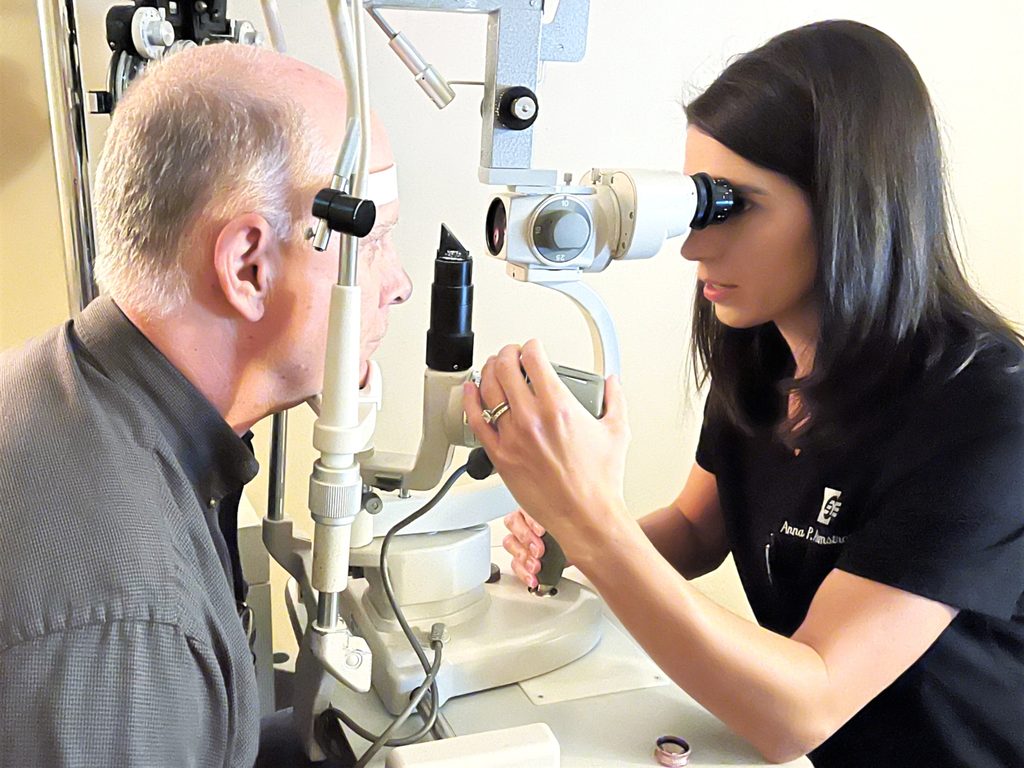
“Just as high blood sugar causes damage to vessels throughout the body, it also affects the vessels in the retina,” says Dr. Anna Armstrong, a therapeutic certified optometrist with Hattiesburg Eye Clinic. “This can lead to conditions directly related to diabetes, as well as increasing risk for diseases that are common among the entire population.”
As such, diabetics are 2 to 5 times more likely to develop cataracts (and at an earlier age), and 1.5 times as likely to develop glaucoma than non-diabetics. Even more concerning, diabetics experience blindness at least 25 times more than the general population.
But as Dr. Armstrong mentioned, there are also eye diseases that stem directly from diabetes.
“Many patients contend with diabetic retinopathy in which the blood vessel damage can cause bleeding in the retina, as well as fluid leakage and abnormal vessel growth.”
Diabetics are also subject to damage of the macula, a cluster of cells within the retina responsible for clear central vision.
“This is a condition known as diabetic macular edema, in which fluid buildup or swelling in the macula adversely affects a person’s ability to focus clearly in the center of their vision,” says Dr. Armstrong.
But even though your potential risk for eye disease may be high because of diabetes, you’re not without agency to protect your eyesight. The top priority: managing and controlling your disease.
“Managing daily blood sugar levels is so important, not only for a diabetic’s overall health but also in preserving their vision,” says Dr. Armstrong. “Management starts with a commitment to a healthy lifestyle and diet, and actively partnering with their primary care or diabetes doctor to keep blood sugar levels in line.”
And because there’s also a lag between early vessel damage wrought by the disease and experiencing visual symptoms, Dr. Armstrong also advises annual eye exams with dilation to detect any emerging changes in the retina and the rest of the eye.
“Comprehensive exams are an important part of a diabetic’s overall care,” says Dr. Armstrong. “Many PCPs and diabetic specialists are wonderful about encouraging patients to get their annual eye exams, and we in turn try to communicate with their doctors about their eye health, especially if we detect ocular changes that may be related to diabetes.”
But Dr. Armstrong also says that doesn’t mean you have to wait for your exam anniversary if you’re actually noticing problems with your vision.
“A diabetic should always contact their eye care provider as soon as possible if they notice sudden vision changes like blurring, fluctuating vision, difficulty reading, dark spots, or bright flashes.”
Even if you’ve already experienced diabetic eye damage, there are treatments and procedures that could help ease the impact. But by far the most effective strategy for optimal eye health is to simply take care of yourself and your eyes: manage your blood sugar, pursue a healthy lifestyle, and get an eye exam at least once a year.
To learn more about Hattiesburg Eye Clinic’s comprehensive vision care services, be sure to visit our website. To find out how Hattiesburg Eye Clinic can improve your vision health, call 601-268-5910 (or toll-free 800-624-8254) or schedule a consultation with us at www.hattiesburgeyeclinic.com/contact-us/